


In modern architectural lighting, true balance between form and function relies on precise light control—not just aesthetics. Enter the TRIAC dimmer: a powerful yet often overlooked tool behind seamless lighting experiences in UAE homes and commercial spaces.
This guide breaks down how TRIAC dimmers work, their key benefits, and how they’re used in real-world settings, offering a clear look at this essential lighting control technology.
Understanding TRIAC Dimming Technology
What Is a TRIAC Dimmer?
A TRIAC (Triode for Alternating Current) dimmer is a semiconductor device that modulates the brightness of electric lighting by controlling the flow of alternating current (AC). As a form of phase-cut dimming, it delivers electricity in rapid, intermittent bursts rather than a continuous stream, effectively adjusting light intensity.
The technology works by allowing current to pass through a thyristor only when triggered via a control gate. This interruption and reactivation happen dozens of times per second, imperceptible to the human eye but crucial in reducing or increasing perceived brightness. Unlike simple on/off switches, TRIAC dimmers offer nuanced control that transforms lighting from merely functional to atmospherically intentional.
The Role of Thyristors
At the core of the TRIAC dimmer lies the thyristor—a three-electrode semiconductor (anode, cathode, and gate) that facilitates bidirectional current flow. When a pulse is sent to the gate, the thyristor becomes conductive, allowing AC current to pass through in controlled intervals. The timing of this gate activation within the AC waveform dictates how much power reaches the lamp.

AC vs. DC Dimming: Key Differences
Lighting systems across the UAE utilize both AC and DC dimming technologies depending on the type of fixture and control requirements. Each offers distinct operational dynamics.
DC (Direct Current) Dimming
-
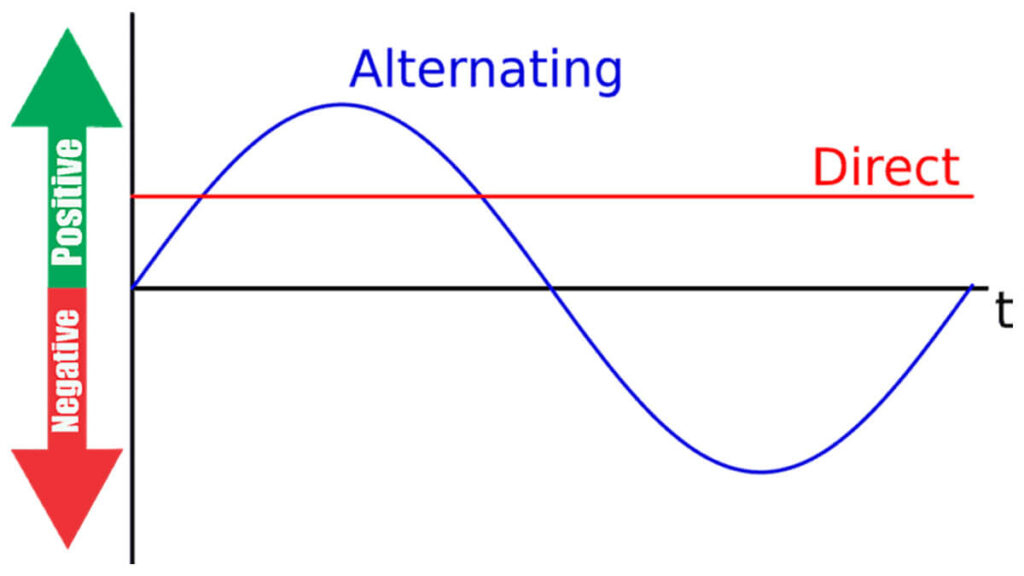
Consistent Power Flow: DC systems deliver steady current, making dimming straightforward and highly stable.
-
Common Applications: Primarily used in low-voltage LED systems, such as under-cabinet lighting or integrated task lighting.
-
Control Simplicity: Dimming is achieved by reducing current to the fixture—ideal for spaces requiring smooth transitions and flicker-free performance.
AC (Alternating Current) Dimming
-
Sinusoidal Flow: AC power alternates between positive and negative cycles, requiring more complex dimming strategies.
-
Phase-Cut Control: TRIAC dimmers regulate AC by 'cutting' the wave at specific intervals.
-
Versatility: AC dimming supports a wide range of lighting types including incandescent, halogen, and select dimmable LED and CFL bulbs.
Leading-Edge vs. Trailing-Edge Dimming
Leading-Edge Dimming (TRIAC-Based)
-
How It Works: Interrupts the power at the start of the AC waveform, then restores it mid-cycle.
-
Ideal For: Resistive loads such as incandescent and halogen lights.
-
Limitations: Can cause noise or flickering when used with certain LED technologies.
Trailing-Edge Dimming
-
Operation: Cuts power at the end of the waveform, creating a smoother power transition.
-
Application: Designed for sensitive electronics, particularly LEDs with integrated drivers.
-
Performance: Offers silent operation and minimal flicker—essential for luxury interiors and hospitality environments.
Common Types of Dimmer Switches Compatible with TRIAC

TRIAC dimmers can be integrated into various switch formats, each offering unique advantages in terms of form factor, usability, and application context.
Rotary Dimmers
-
Description: Classic knob-style dimmers that offer tactile control.
-
Use Case: Traditional interiors or spaces where manual operation is preferred.
Slide Dimmers
-
Design: Features a linear slider for continuous brightness adjustment.
-
Aesthetic: Modern, minimal, and suitable for both residential and commercial environments.
Toggle and Decora Dimmers
-
Form: Combines standard toggle or paddle switch design with integrated dimming.
-
Advantage: Familiar interface with added dimming capability.
Touch and Smart Dimmers
-
Technology: Capacitive touch or app-connected controls.
-
Application: High-end residential spaces or office environments requiring automation and scheduling.
Multi-Location and 3-Way/4-Way Switches
-
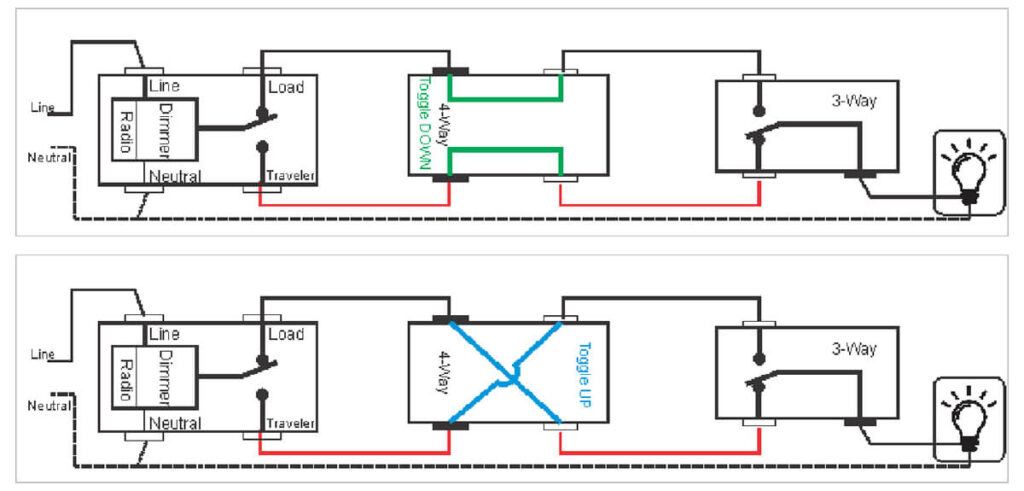
Functionality: Allows lighting control from multiple points.
-
Integration: Useful in large majlis areas, corridors, or open-plan villas common in Gulf architecture.
Plug-In Dimmers
-
Flexibility: External modules that provide dimming for portable lamps without internal wiring modifications.
-
Suitability: Ideal for apartments or temporary installations.
Technical Insight: How TRIAC Dimmers Function
Capacitor Timing
Capacitors in the TRIAC circuit store electrical energy and release it at calculated intervals to trigger the thyristor gate. The timing depends on how quickly the capacitor charges—controlled by the value of resistance in the circuit.
Potentiometer Adjustment
A potentiometer (adjustable resistor) is used to fine-tune the resistance, thereby modifying the charge rate of the capacitor and, in turn, the brightness level of the light. This analog mechanism makes TRIAC dimmers both simple and precise.

Advantages of TRIAC Dimmers
-
High Voltage Compatibility
Can handle standard AC voltages common in residential and commercial installations across the UAE. -
Wide Compatibility
Supports incandescent, halogen, and a growing number of dimmable LED and CFL lamps. -
Reliable Operation
Analog components ensure consistent performance with minimal maintenance. -
Cost Efficiency
Relatively low production and installation costs make TRIAC a practical solution for most applications. -
Easy Integration
Typically requires replacing only the wall switch, making retrofitting straightforward. -
Security and Stability
No reliance on software or network systems, reducing potential for malfunctions or cyber vulnerabilities.
Limitations of TRIAC Dimmers
-
Not Compatible with All LEDs: Some dimmable LED bulbs may still experience flicker or limited range.
-
Audible Noise: Certain loads can cause a faint humming.
-
Not Ideal for Low-Wattage Loads: Performance may degrade with minimal connected load.
-
Heat Generation: Must be managed properly, especially in enclosed fixtures or high-wattage scenarios.
Comparing TRIAC to PWM and 0–10V Dimming
PWM (Pulse Width Modulation)
-
Method: Digital control via rapid on/off cycles.
-
Power Type: Requires DC systems.
-
Application: Used in digital RGB lighting and compact electronics.
0–10V Dimming
-
Approach: Analog voltage control, typically from a wall-mounted controller.
-
Compatibility: Requires specific 0–10V drivers and fixtures.
-
Use Case: Suited for commercial-grade LED lighting systems.

Advanced Alternatives: Industrial Lighting Control Protocols
DALI (Digital Addressable Lighting Interface)
A digital protocol ideal for complex commercial projects such as malls or airports in the UAE. DALI enables individual control of each fixture, making it perfect for architectural lighting and energy-efficient operation.
DMX (Digital Multiplex)
Common in theatrical and landscape lighting, DMX provides robust control over color, intensity, and effects, particularly in dynamic environments such as hotels, event venues, or outdoor façades.
Choosing the Right Dimming Solution
When selecting a dimming system, consider the complexity and scale of your space:
-
Small & Simple: TRIAC or PWM; basic control with minimal setup.
-
Small & Complex: PWM or smart TRIAC; enables zone-specific control.
-
Large & Simple: 0–10V; efficient for uniform lighting adjustments.
-
Large & Complex: DALI or DMX; ideal for flexible, scalable control across zones.
For retrofitting existing spaces in the UAE, particularly older villas or apartments transitioning to LED lighting, TRIAC dimmers offer an affordable and compatible upgrade path with minimal disruption.
Conclusion
TRIAC dimmers remain a cornerstone of modern lighting control, particularly in residential and small-to-medium commercial settings. Their ability to deliver precise, reliable, and cost-effective dimming without the complexity of digital protocols makes them especially suited for the UAE’s evolving interior landscapes.
By understanding the core principles behind TRIAC dimming—alongside its variations and alternatives—designers, architects, and homeowners can make informed decisions that elevate both functionality and ambiance. As lighting continues to play a central role in defining interior experiences, mastering control is not just a technical choice—it’s a design imperative.